
Southern Cameroon’s Mintom landscape is a stronghold for biodiversity in Central Africa. This vast tropical forest supports a remarkable variety of life, from forest elephants and great apes to pangolins, blue duikers, frogs and countless other species. Yet this ecological richness faces growing pressure from human activities. Unregulated hunting, habitat fragmentation, agricultural encroachment, illegal mining and infrastructure development are accelerating the erosion of wildlife populations and ecosystem health.
In response, the Sustainable Wildlife Management (SWM) Programme is implementing a comprehensive biodiversity assessment across the Mintom landscape. This initiative is designed to do more than record declines; it aims to generate robust, site-specific data that informs conservation priorities, guides sustainable management practices and lays the foundation for new forms of biodiversity financing.
Laying the foundation for biodiversity financing
The SWM Programme team has adopted a three-stage assessment framework that integrates ecological research, community knowledge and spatial analysis. The first stage frames the system, defining what is being monitored, the scale and scope of measurement, and the potential application of results to conservation credit systems. The framing stage also establishes timelines, sets site-based targets, and determines how value might be attributed to different areas or species. For example, tiered credit systems linked to ecological importance can help determine value.
The broader goal of this work is not only to inform conservation strategies in Mintom but to build the methodological foundation for biodiversity crediting — a system in which conservation outcomes can be verified, valued, and potentially financed. As global interest in biodiversity markets continues to grow, the demand for credible, science-based metrics will only increase. The approach being developed in Mintom offers a model that is ecologically rigorous, locally relevant, and adaptable across different ecological and cultural contexts.
Nature-finance mechanisms, including carbon and biodiversity credits, are generally structured on a per-hectare basis. Depending on ecological goals and the nature of threats, credits can be structured to reward either avoided loss or measurable restoration. Some credit systems apply to all ecosystem types, while others focus on specific biomes, such as tropical forests or freshwater wetlands.
Once the initial framing is complete, the assessment moves to stage two: the quantification phase. Here, biodiversity observations are translated into usable data. In Mintom, this includes a combination of camera trap records, environmental DNA (eDNA) analysis, acoustic monitoring, transect-based species surveys, and participatory methods drawing on local ecological knowledge (Table 1).
The SWM Programme team generates a composite biodiversity condition score by aggregating multiple indicators, including species richness, population trends, habitat quality, and threat levels. Most metrics are normalized using a “distance-to-target” scale, where one represents a pristine or near-pristine ecosystem. Targets are typically derived from historical baselines, nearby intact sites, or expert knowledge, allowing for transparent comparisons across space and time.
The third and final stage of the biodiversity assessment framework centres on detecting change and evaluating performance. In cases where biodiversity improves from a defined baseline, restoration credits may be issued. In others, where stability is maintained in the face of growing pressures, conservation credits can recognize avoided loss. These evaluations are grounded in counterfactual analysis, meaning they establish what would have happened in the absence of intervention; the evaluations may be subject to performance adjustments. For instance, credit values can be reduced in areas facing persistent degradation or increased in regions that demonstrate ecological resilience despite high threat levels. In some cases, biodiversity conservation credits are awarded based on whether a site meets a defined ecological threshold, using a pass/fail model.
| FOCUS AREA | APPLICATION |
| Endangered species (e.g. apes, elephants, pangolins) | Define credit tiers by species status; quantify poaching pressure and species trends; monitor using camera traps and local reporting |
| Trafficked species (e.g. pangolins) | Link crediting to anti-trafficking outcomes; validate through eDNA and law enforcement data |
| Culturally significant species (e.g. duikers, porcupines) | Integrate traditional ecological knowledge (TEK) into metrics; co-define stewardship targets with communities |
| Ecosystem health indicators (e.g. frog diversity) | Use eDNA and acoustic data to monitor water quality and habitat resilience |
Applying the framework
This structured approach is already being applied across four distinct thematic areas in Mintom: conserving endangered species, improving law enforcement related to trafficked species, integrating traditional ecological knowledge (TEK), and sustaining vital ecological functions (Table 1).
For endangered species such as great apes, elephants, pangolins, and big cats, the team defines conservation priorities according to species status and poaching risk. Population and threat data are integrated into crediting models that emphasise high-risk zones.
For pangolins, the world’s most trafficked mammal, efforts focus on detecting trafficking hotspots and linking credit systems to anti-trafficking outcomes. Habitat quality assessments are informed by law enforcement data, eDNA traces, and soundscape analysis.
For culturally significant species such as blue duikers, red duikers, and porcupines, the team collaborates with local communities to co-define metrics of sustainable use and stewardship, blending biological indicators with insights from traditional ecological knowledge.
In parallel, frogs are being monitored as indicators of ecosystem health, especially in wetland habitats. By analysing frog calls and eDNA signals over time, the team tracks changes in ecological function, water quality, and resilience.
By systematically tracking biodiversity and linking monitoring to practical management and policy tools, the SWM Programme is demonstrating how evidence-based conservation can operate at landscape scale. In doing so, it provides a timely example of how tropical forest systems can be better understood, better protected, and more sustainably supported, both ecologically and financially.
Early results
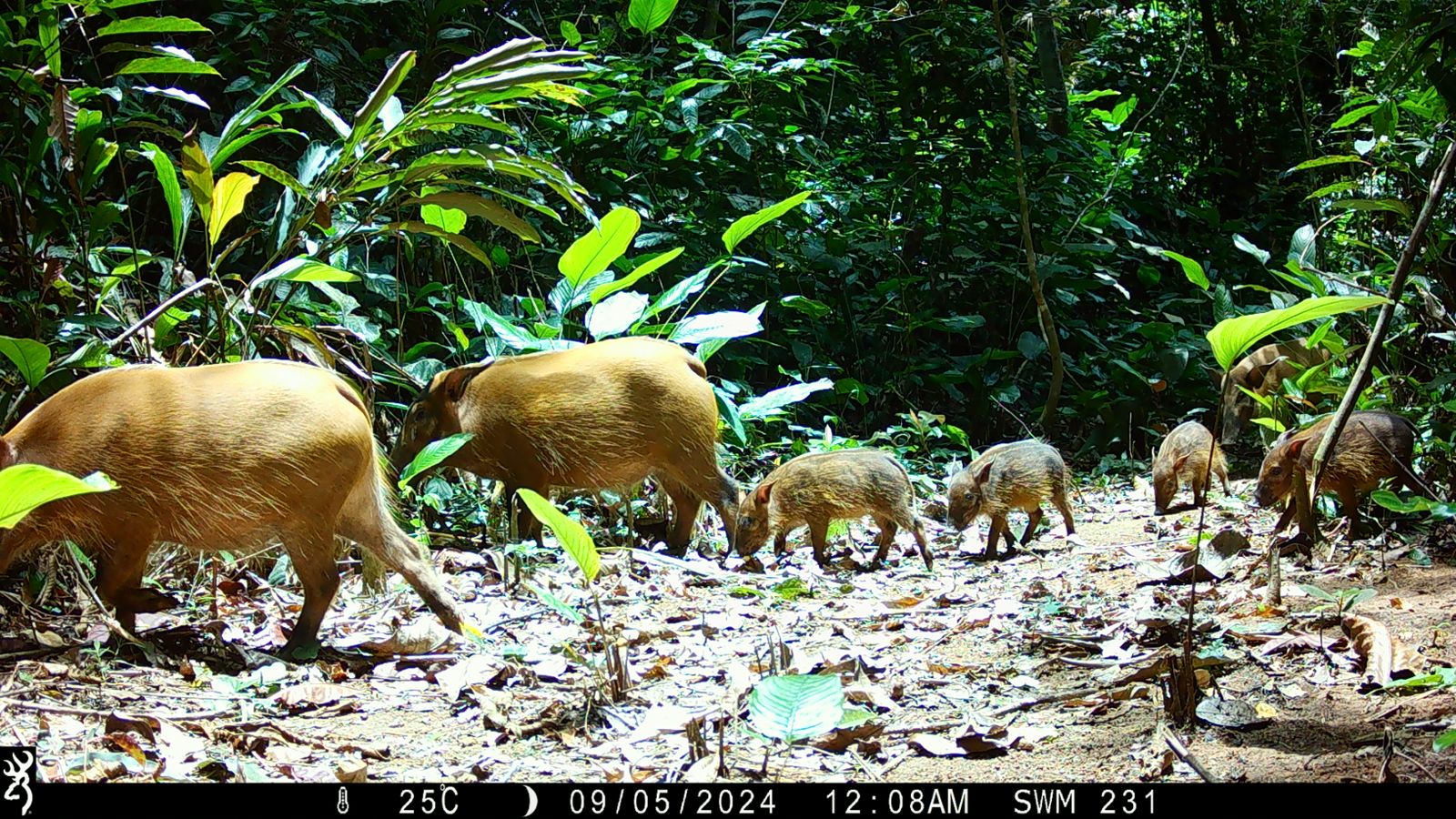
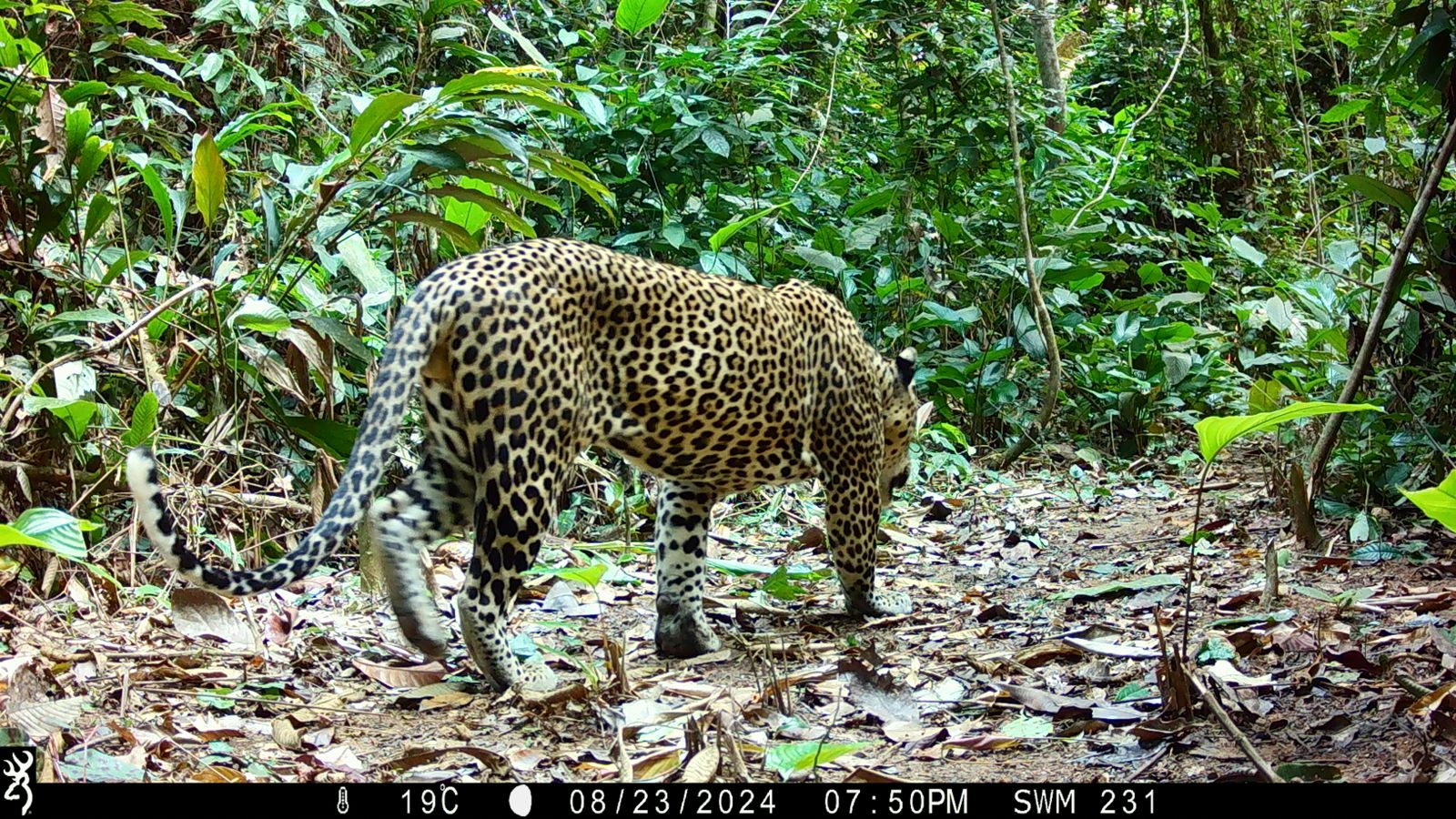
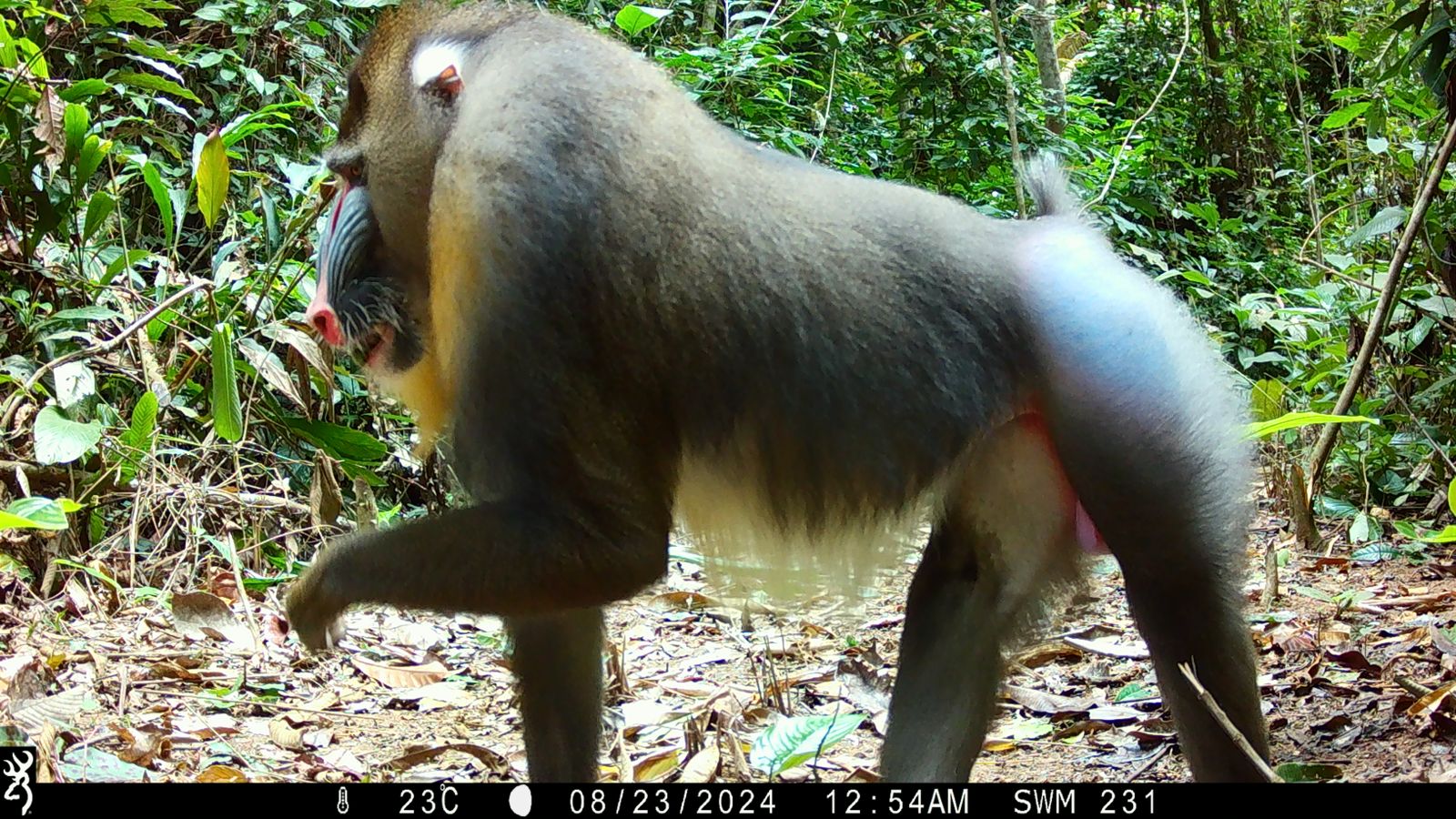
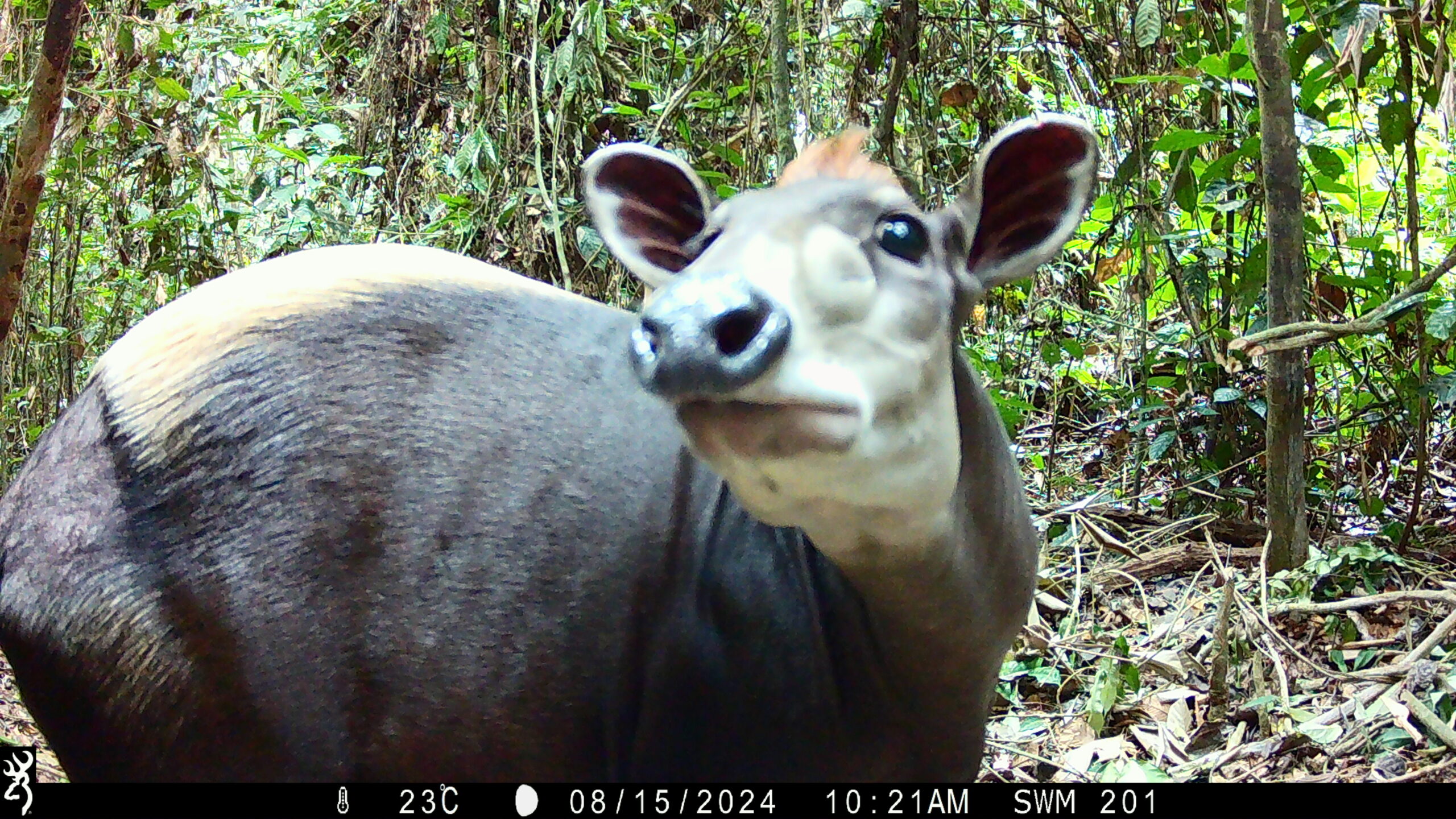
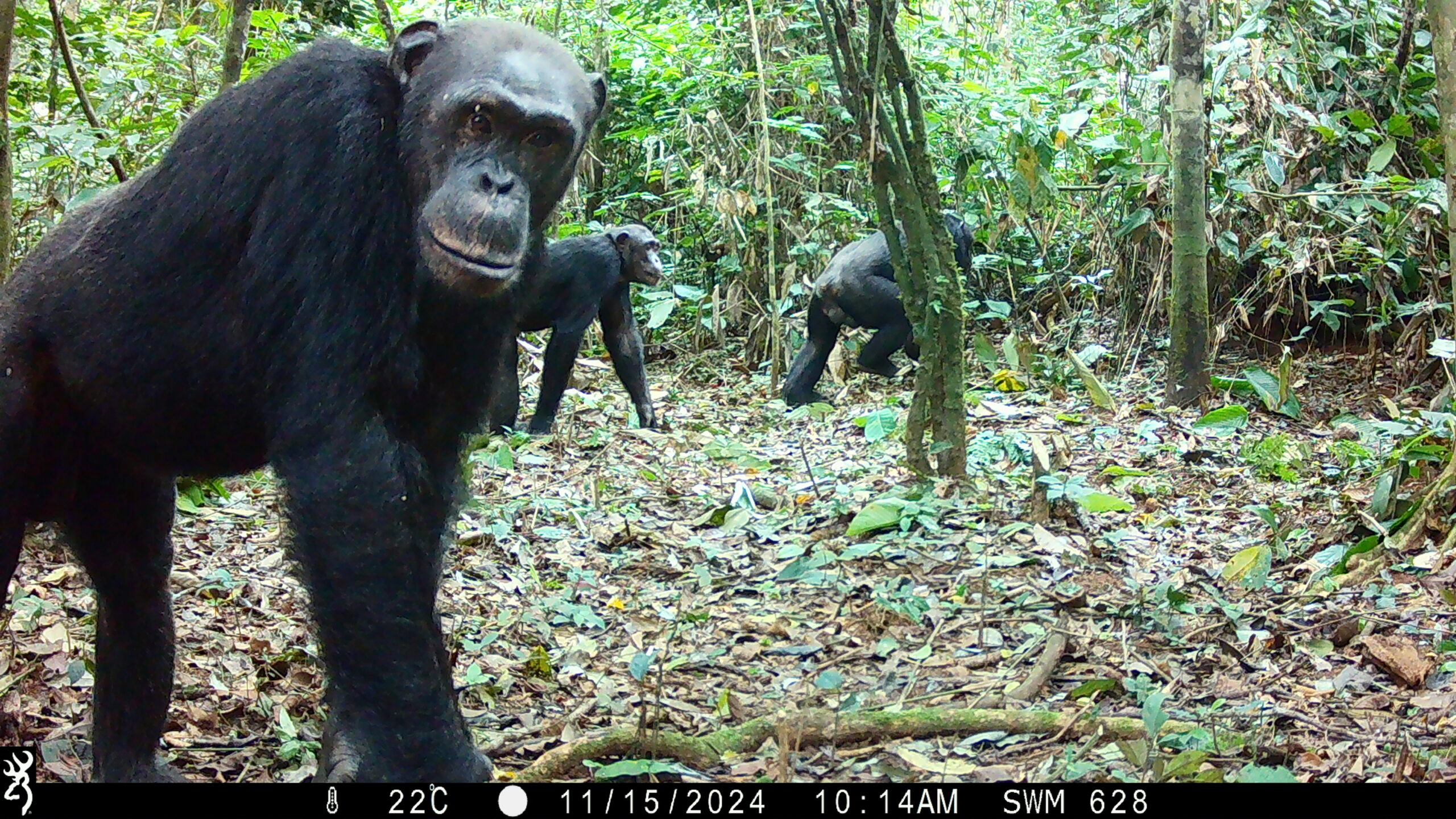
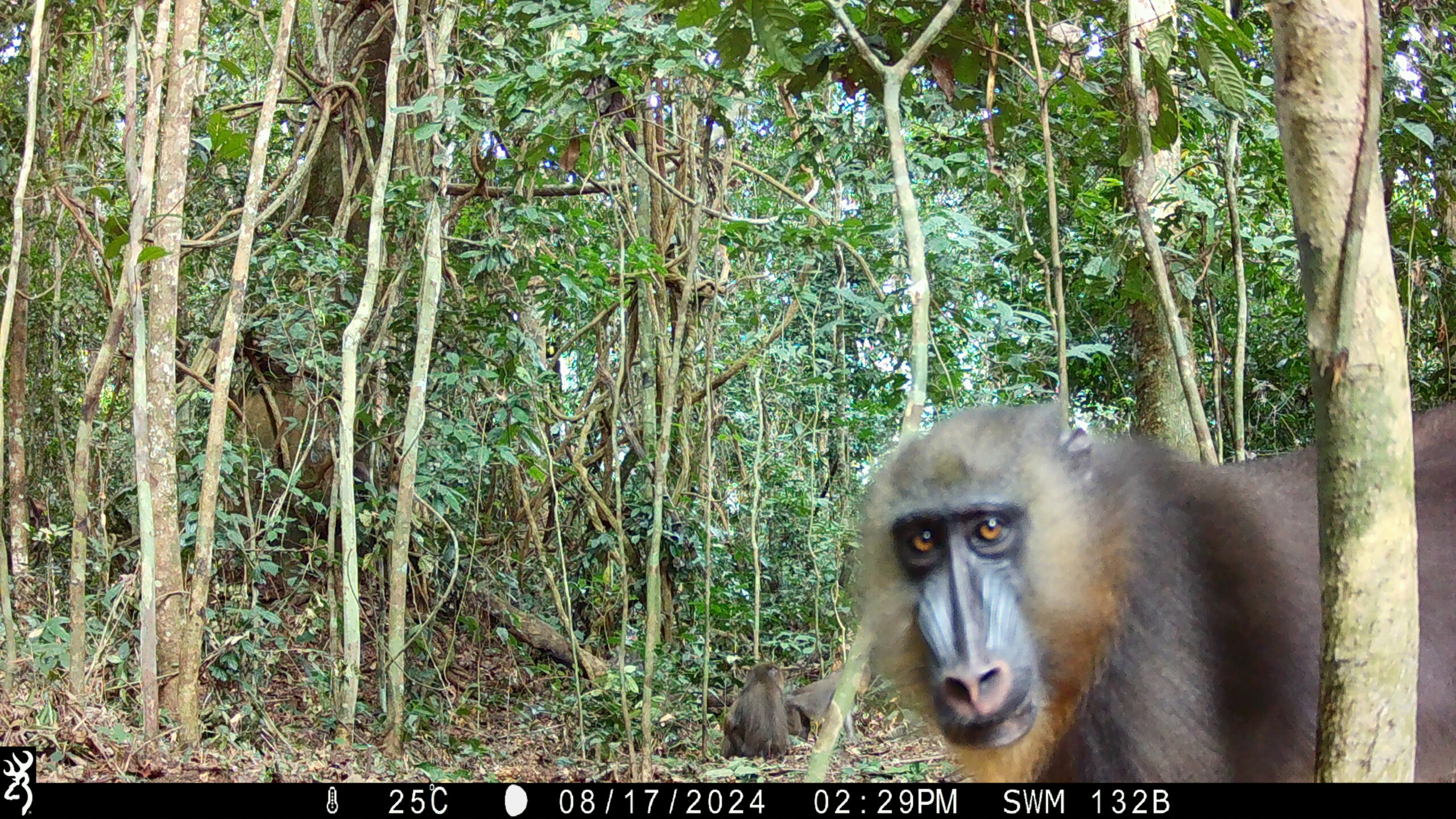
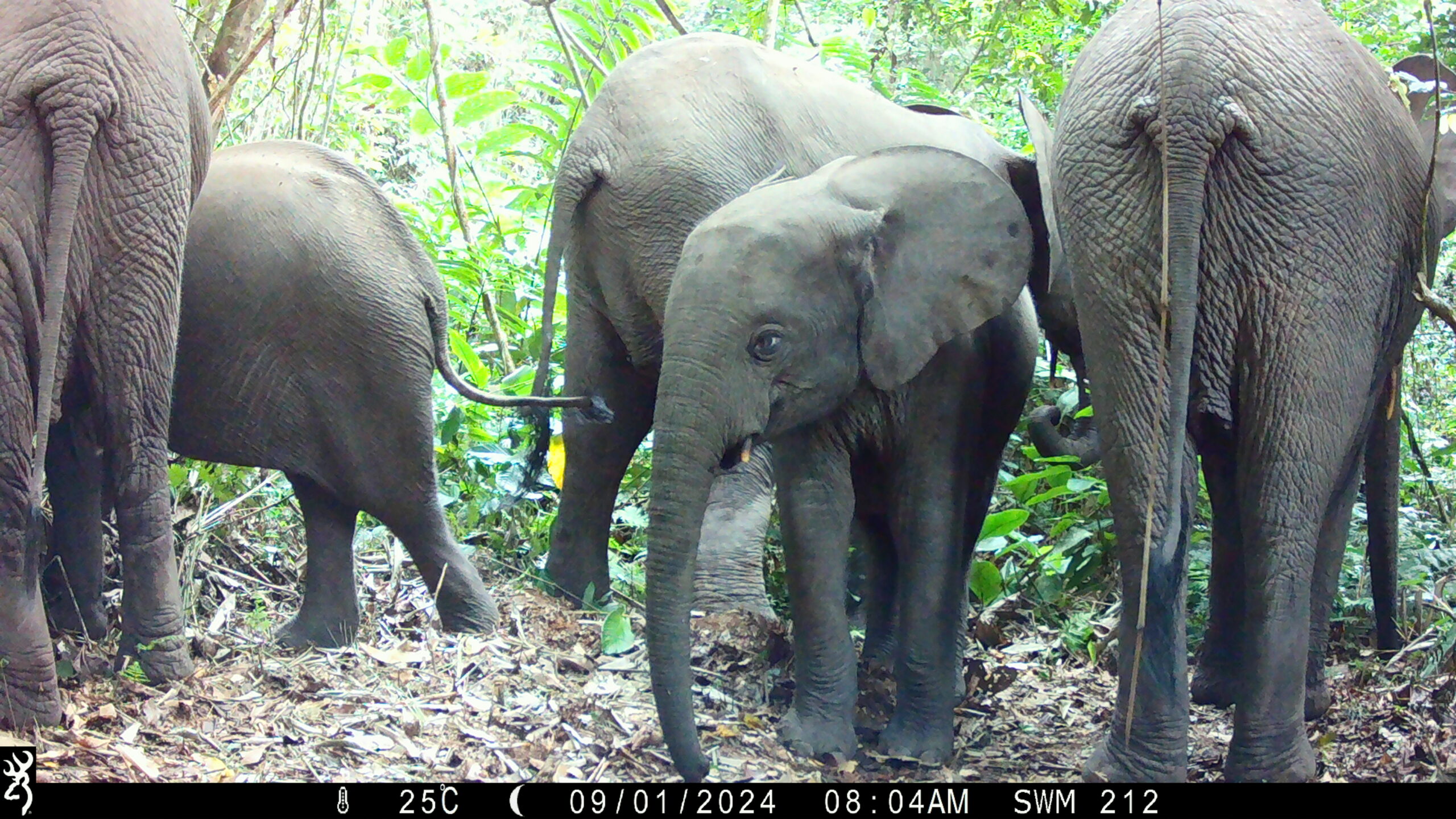
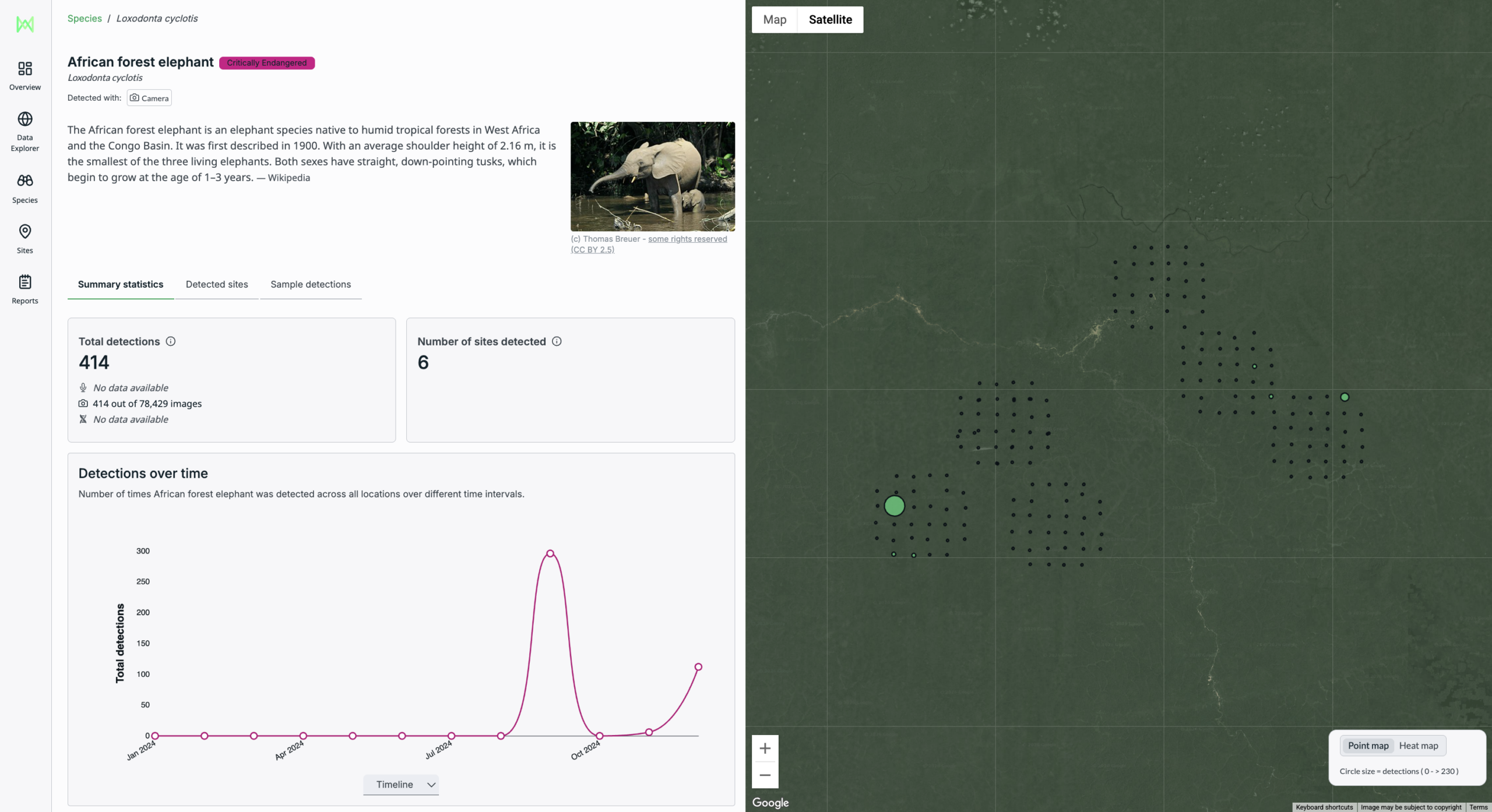
The camera trapping carried out between July and December 2024 covered 193 sampling sites across the Mintom landscape and detected 68 unique species, including a leopard (Panthera pardus), a male mandrill (Mandrillus sphinx), and a sounder of red river hogs (Potamochoerus porcus) in dense tropical forest. The camera traps also identified two critically endangered species: the lowland gorilla (Gorilla gorilla) and the African forest elephant (Loxodonta cyclotis). These images illustrate the diversity of medium- and large-bodied mammals documented in the region and the effectiveness of passive monitoring tools for wildlife detection and biodiversity assessments. Timestamps and ambient temperatures at the time of capture are indicated on each frame.