
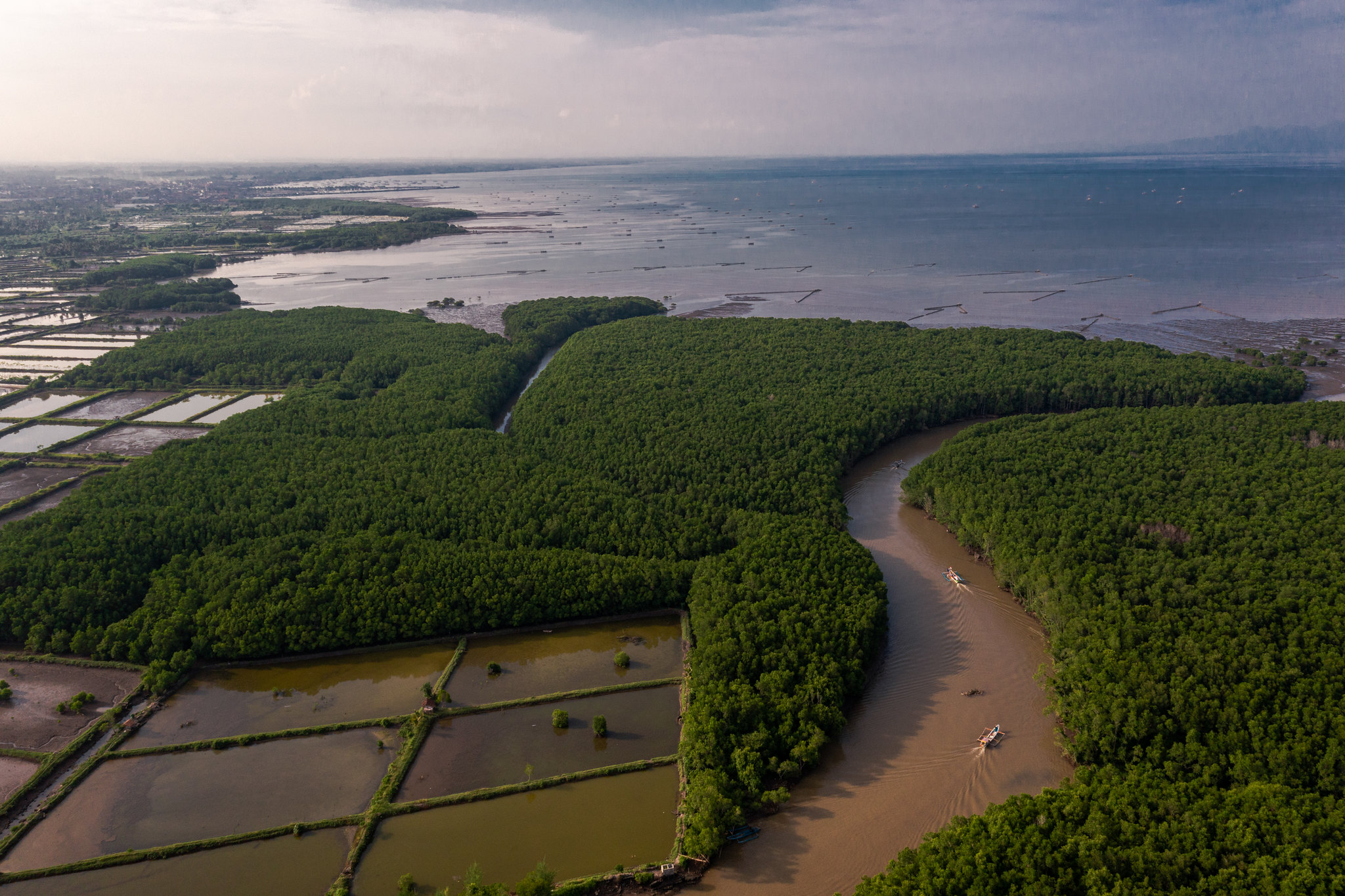
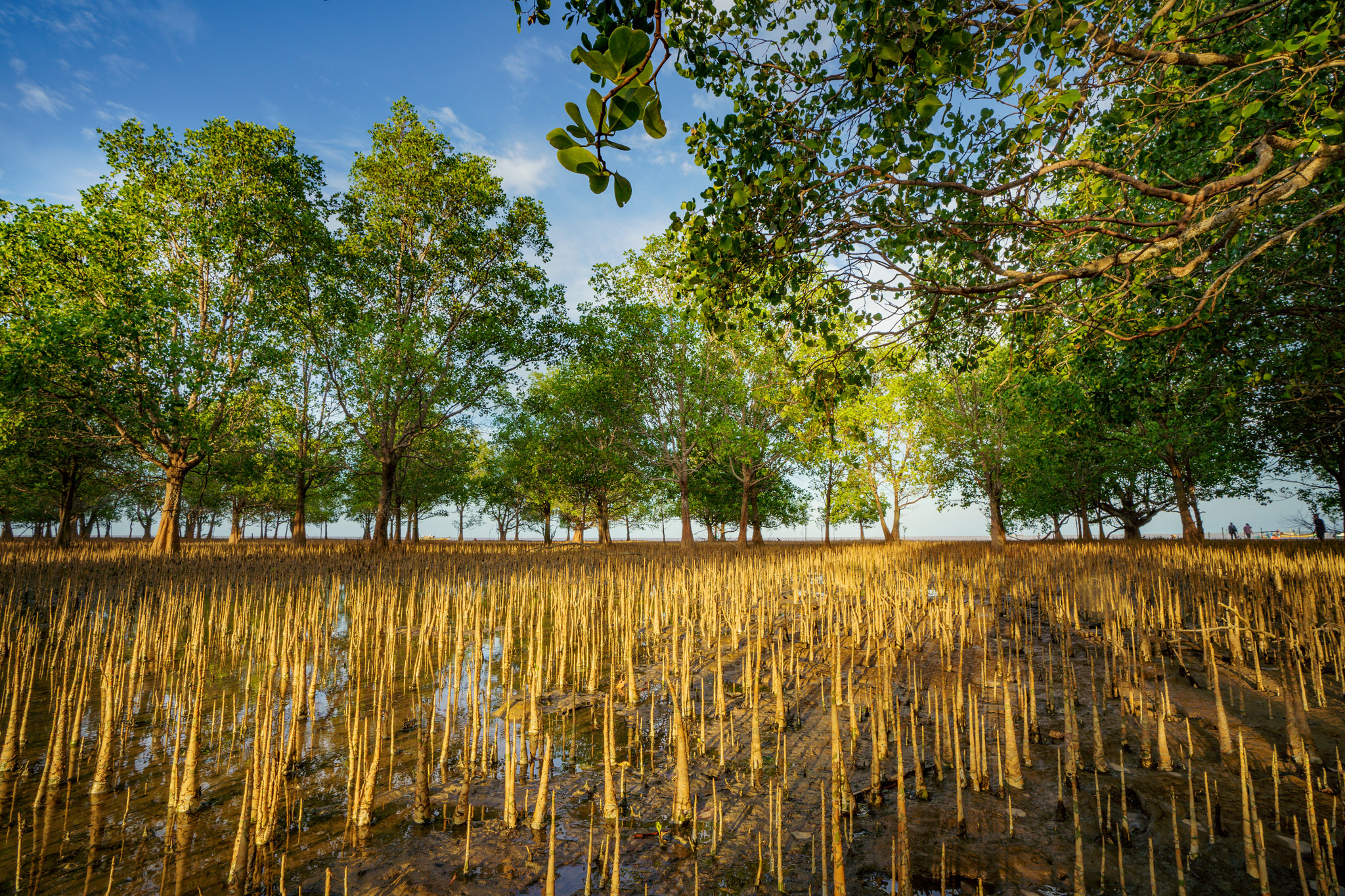
Viet Nam’s mangroves and seagrass meadows are among Southeast Asia’s most valuable blue carbon ecosystems. They capture and store carbon at rates few terrestrial ecosystems can match while protecting coastal communities from storms and supporting local livelihoods.
Despite this potential, turning lessons from local initiatives into coordinated national action remains a challenge.
A recent Vietnam blue carbon opportunity assessment by Flinders University and Landscape Alliance, found that mangrove restoration across seven Mekong Delta provinces failed to keep pace with continued mangrove loss. Between 2016 and 2024, this resulted in a net emissions impact of 14.5 million metric tons of CO₂.
The challenge now is turning lessons from blue carbon initiatives into national climate action. Doing so requires clear policies, consistent standards and effective coordination.
The need is particularly evident in Ca Mau, which accounted for 77 percent of the Mekong Delta’s net mangrove emissions impact during the assessment period. The province has become a focal area for UBS Optimus Foundation-backed blue carbon initiatives exploring practical approaches to mangrove conservation and restoration.
Building national policy for blue carbon
Viet Nam has strengthened its policy and institutional foundation for blue carbon through its updated Nationally Determined Contribution (NDC), the establishment of the National Blue Carbon Action Partnership (NBCAP) Secretariat in January 2026 following an announcement at COP30 and the designation of the Ministry of Agriculture and Environment (MAE) to lead development of a national blue carbon roadmap.
Together, these developments point to Viet Nam’s growing commitment to integrating blue carbon into its national climate strategy.
Since 2024, Landscape Alliance has worked alongside MAE to ensure that lessons emerging from blue carbon initiatives inform national policy guidance. Through UBS Optimus Foundation-backed initiatives in Can Tho, Ca Mau and An Giang, World Wildlife Fund (WWF) and the International Union for Conservation of Nature (IUCN) have been exploring practical approaches to blue carbon implementation.
Landscape Alliance has focused on developing the policy frameworks needed to support future implementation more widely.
In June 2026, two knowledge-sharing events in Ho Chi Minh City and Ha Noi brought together Landscape Alliance, WWF, IUCN, Flinders University and local collaborators.
A two-day workshop brought together 151 unique participants, while a networking event drew 22 participants. Representatives from MAE, NBCAP, provincial governments, research institutions and international development partners examined lessons emerging from UBS Optimus Foundation-backed initiatives, recent developments in Viet Nam’s blue carbon policy and financing and the practical steps needed to move towards national action.
Discussions also focused on the need to align future blue carbon financing with national measurement, reporting and verification (MRV) standards and strengthen mechanisms to ensure carbon revenues reach local communities.
Viet Nam’s experience points to a broader lesson: local implementation and national policy need to evolve together. Field experience can help shape stronger institutions, while clear policies, consistent standards and coordinated financing create the conditions needed to apply promising approaches more widely.
That means ensuring MAE’s leadership is informed by lessons and evidence from implementation, while donors, implementing organizations and government agencies work from a common evidence base and shared priorities.
From policy alignment to implementation
With the NBCAP working group now officially established and MAE leading development of the National Blue Carbon Action Roadmap, attention is turning from policy alignment towards implementation.
The next step is to build on this political momentum by developing consistent measurement standards and reliable financing mechanisms. These systems will be needed if blue carbon initiatives are to continue beyond individual project cycles.
The June events marked the close of Phase 1 (2024–2025) of the UBS Optimus Foundation-backed initiative and helped chart a path towards Phase 2, as Viet Nam works to connect emerging blue carbon experience with national planning, standards and finance.