
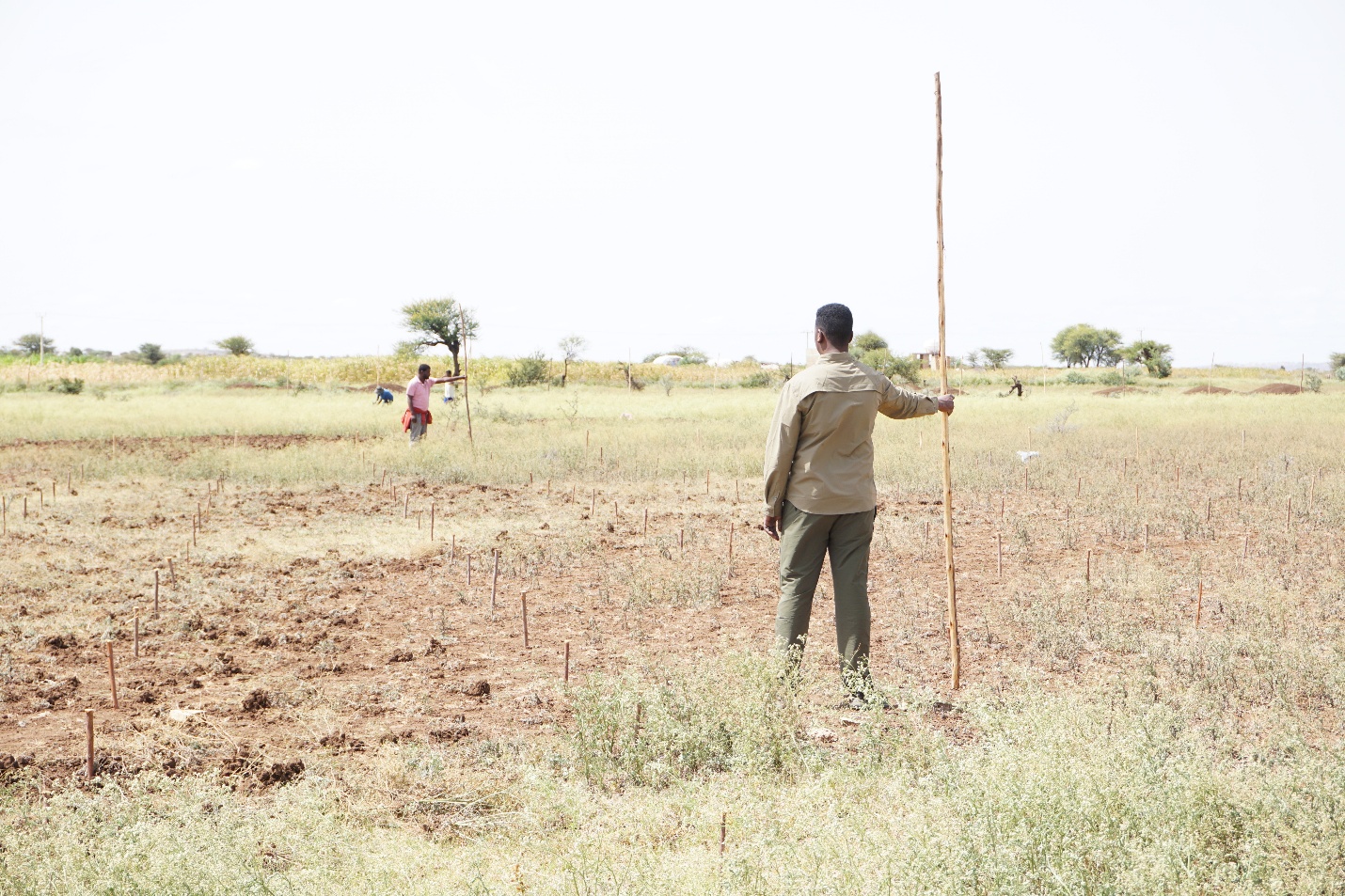
Much of Ethiopia’s Somali Region is lowland and dry. Across a field in Kaaho kebele (lowest government administration), Kabribayah district, about 70 kilometres from Jigjiga, a 50-metre measuring tape stretches between wooden pegs marking planting points two metres apart. The pegs are driven into the fertile soil, marking where the trees will be planted.
On July 9, 2026, about 10 men were preparing the five-hectare site for a seedling seed orchard (SSO) of Faidherbia albida. The land, allocated by the Somali regional government, had already been enclosed with barbed-wire fencing.
The work is part of the Right Tree in the Right Place for the Right Purpose (RTRP) project, launched in Ethiopia in 2024 under the International Climate Initiative (IKI), an initiative of the German Federal Government supporting international climate action and biodiversity. The project is working to establish reliable sources of high-quality seed from native tree species in the region. It began working in Ethiopia’s Somali region after an inception workshop in Jigjiga in March 2025.
At Kaaho Kabribayah, the men are laying out the orchard design, marking where the Faidherbia albida seedling will be planted and digging the pits one by one. The work moves across the field as each planting point is marked, dug and cleared for the next.
Yared Kebede, a staff member of the Provision of Adequate Tree Seed Portfolios (PATSPO III) initiative, was at the site, busy providing technical guidance and support on establishing the orchard. PATSPO project began working in the highland regions of Ethiopia in 2017 and is now in its third phase.
“The IKI RTRP project wouldn’t have achieved what it has achieved so far without the technical support provided by PATSPO,” said Aden Musse, coordinator of the RTRP project in the Somali region.
Hilal Mohamed, Man-made Forest Development Coordinator at the Somali Regional State Environmental Protection and Rural Land Administration Bureau (EPRLAB), was also at the Kaaho Kabribayah site, alongside the men preparing the orchard, carrying poles and measuring tapes and driving pit-marking pegs into the ground. The regional environment bureau owns the seed orchards and will manage them after the project ends. Its involvement in establishing the sites is therefore a sign of government support for the work and a way for its staff to learn how the orchards are being established and managed.
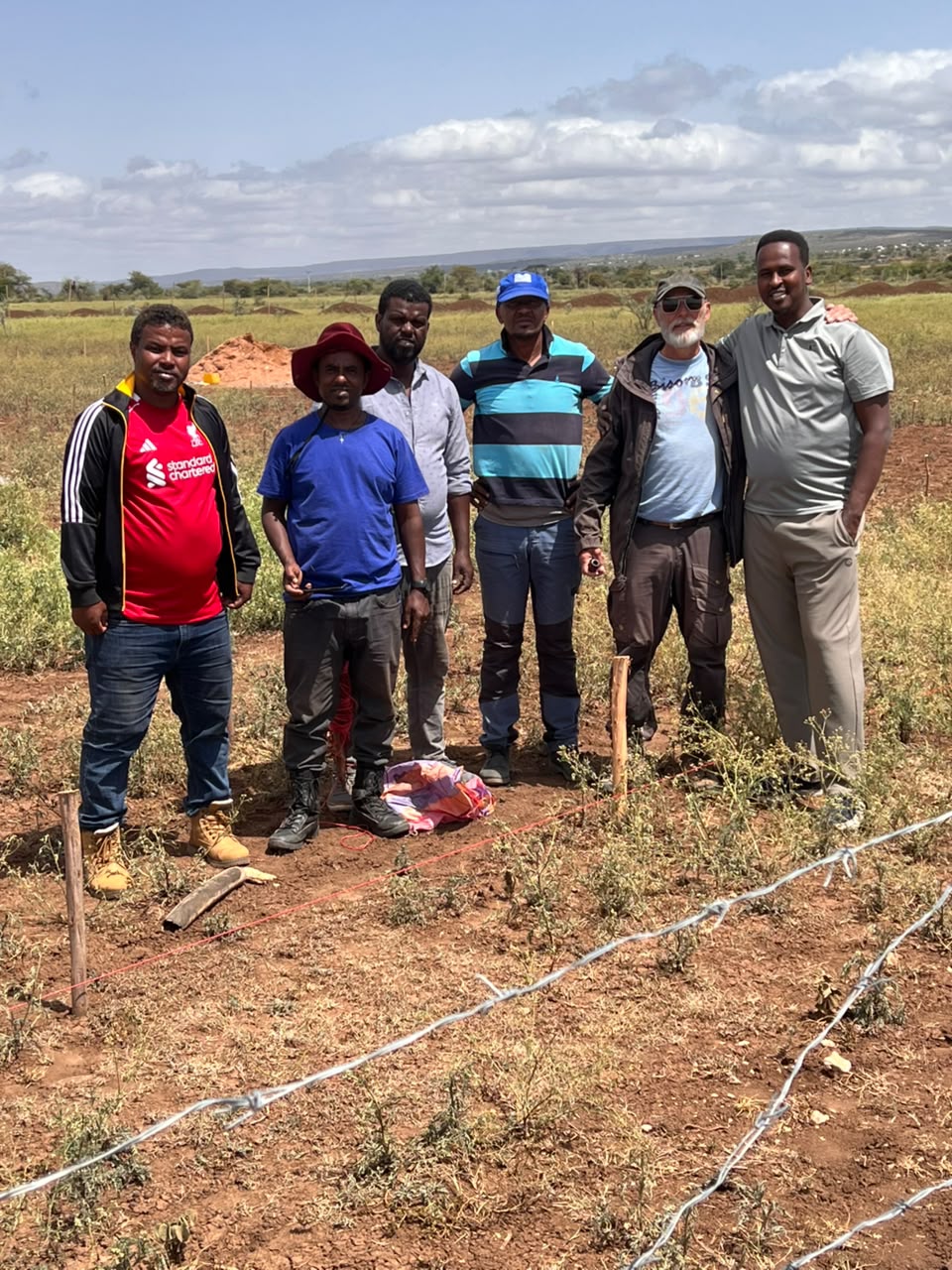
Photo by Carsten Tom Nogaard / University of Copenhagen.
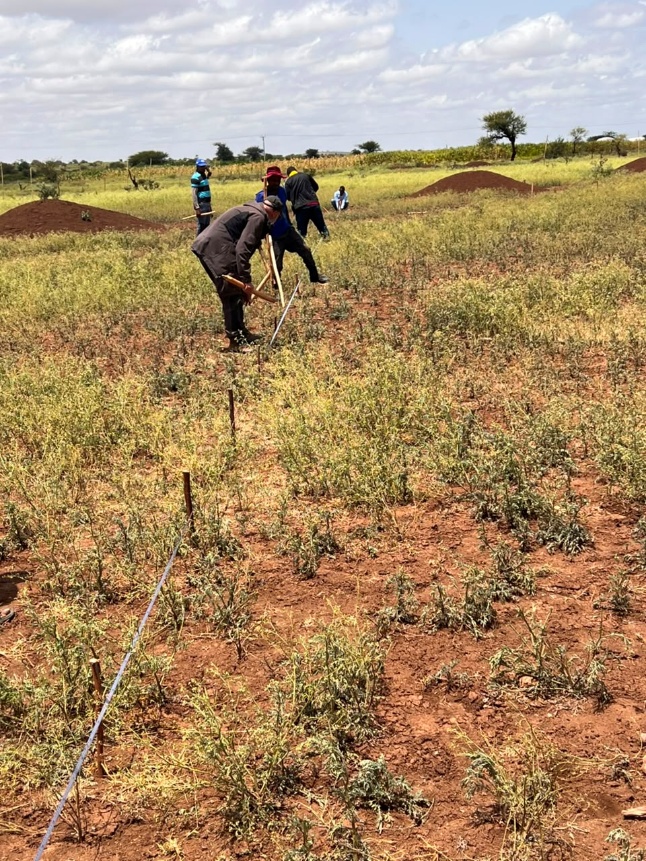
Photo by Carsten Tom Nogaard/University of Copenhagen.
The Kaaho Kabribayah site will see its first trees planted this year. But getting the seedlings established will require a reliable supply of water, with the trees needing to be watered for at least their first year.
“The SSO will get water from a nearby solar-powered water supply scheme constructed for Kabribayah town,” said Hilal. “We have already dug the way through which the pipe from the water supply scheme runs.”
However, there is some concern from the town administration that the water supply may not be enough to meet the town’s needs as well as those of the seed orchard. The project has a Plan B. “If such a problem arises, we can bring water using trucks,” Aden said. “We will dig a pond to store the water from the trucks and water the seedlings from there.” The newly planted seedlings will need watering for a year or two.
The project is already learning from its experience over the past year. The Kaaho Kabribayah site is the second quality tree seed production site. In July 2025, the IKI RTRP project established two SSOs in Kubijaro kebele, Gursum district. The site is located about 15 kilometres from Fafan, and 70 kilometres from Jigjiga. At the Kubijaro Gursum site, the project planted Senegalia senegal and Faidherbia albida seedlings in 2025. This year, it planted Acacia abyssinica and Moringa stenopetala seedlings.
“We have selected 30 useful priority tree species in 2025,” Hilal said. “The IKI RTRP project has listed 22 of them as priority tree species. The ones that are being planted are among the top five.”
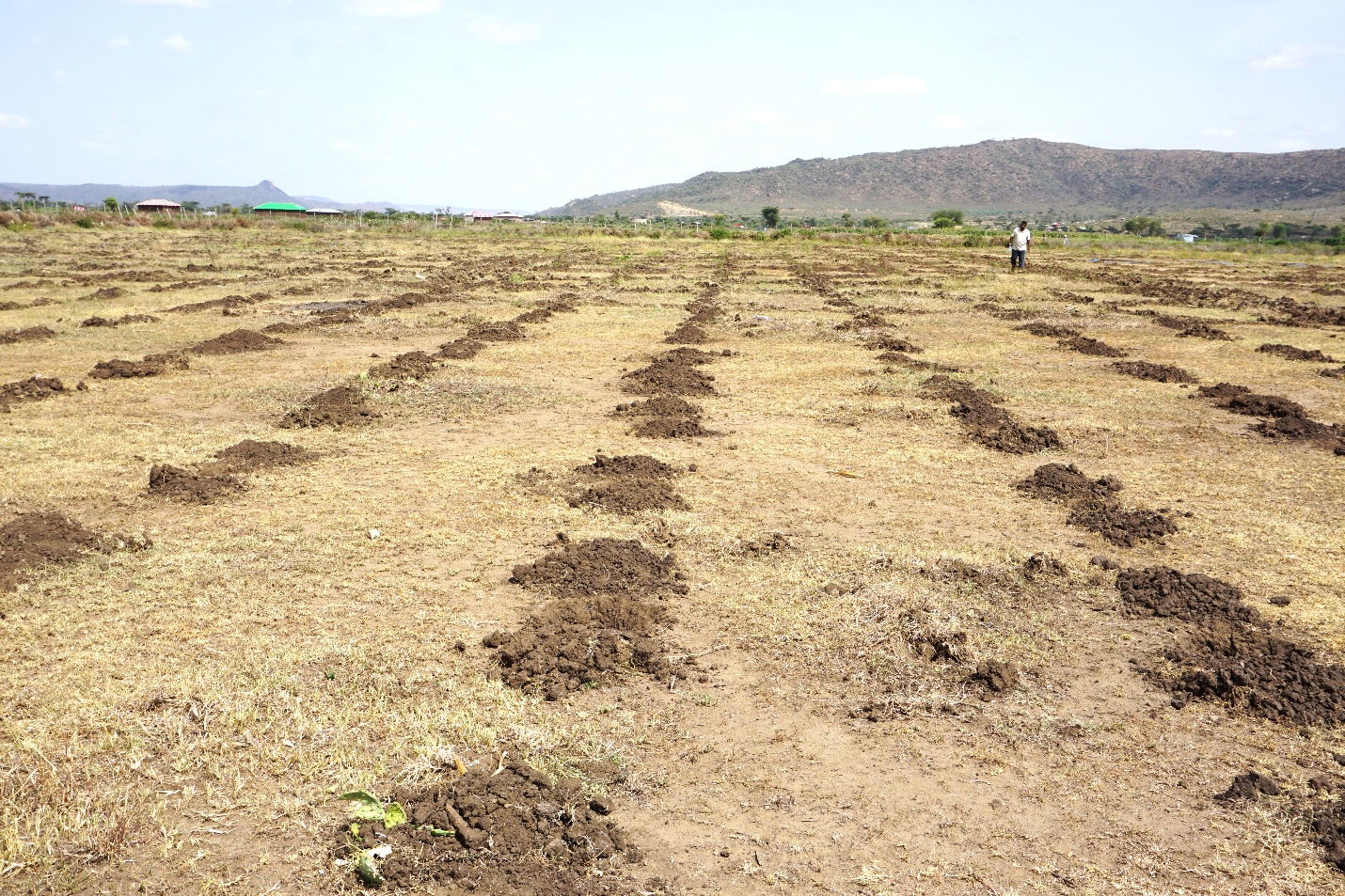
Unlike at Kaaho Kabribayah, where securing enough water for the new seed orchard remains a concern, the Kubijaro Gursum site has a reliable water supply. The project has dug two 16-metre-deep holes using simple, low-cost technology to access groundwater, which is available from eight metres below ground. The two SSOs established last year have been watered every two weeks, over the past year. According to the project coordinator, the survival rate of Senegalia senegal is 99 percent, while that of Faidherbia albida is 95 percent.
Tree Seed Laboratory
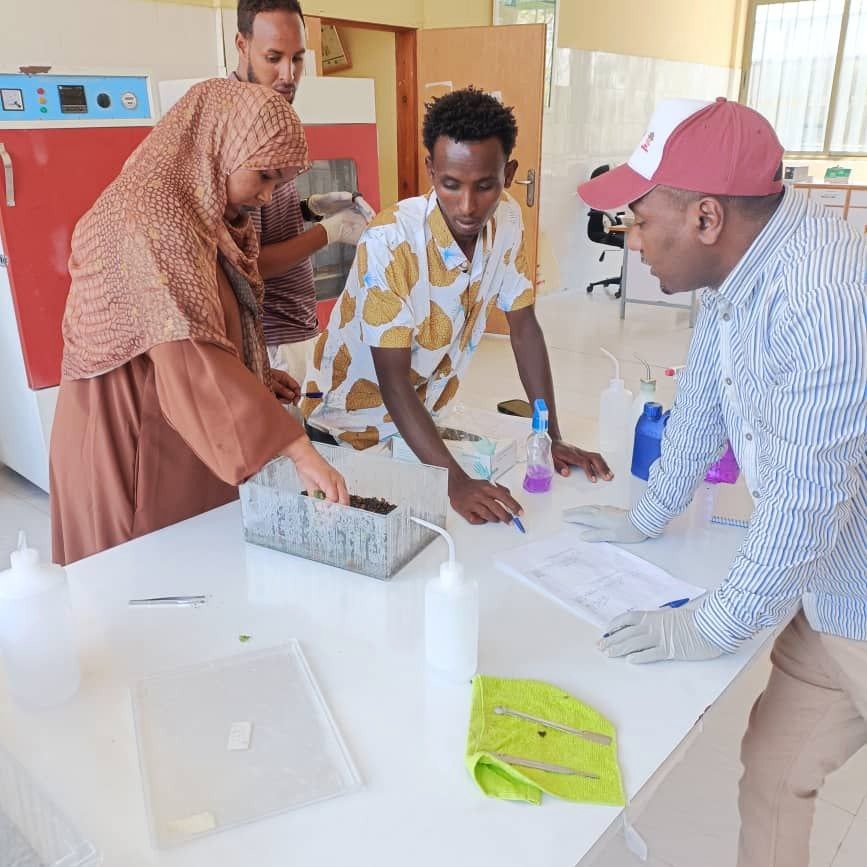
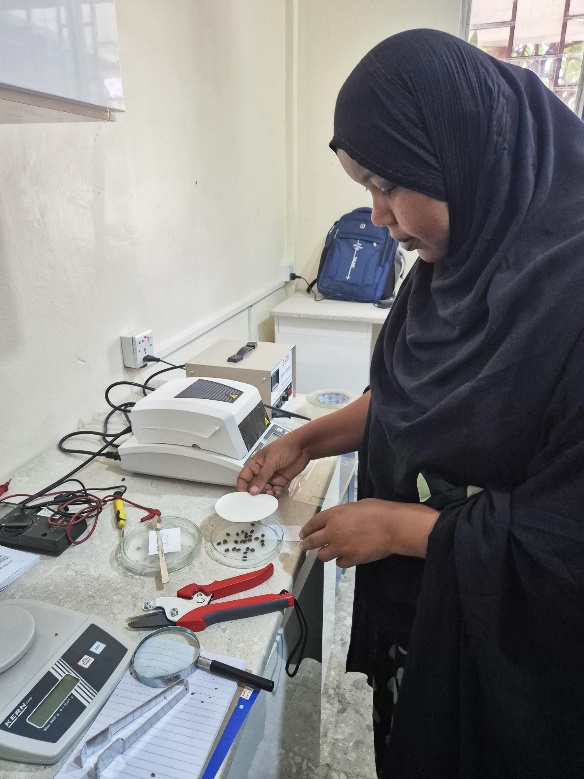
The seed orchards are one part of the system the project is building in the Somali region. In Jigjiga, it has also established the region’s first tree seed laboratory. The regional environment bureau provided the room for the laboratory, while the IKI RTRP project purchased and supplied laboratory equipment and furniture. In collaboration with the PATSPO project, it also trained two laboratory technicians, both staff members of the bureau, who will carry out seed testing. For now, there is no seed being collected in the region. But with seed collector groups now organized in the region, the laboratory technicians are expected to start receiving seeds for testing in the coming months.
Semi-pastoralist seed collector groups
The new laboratory will need a steady supply of seeds to test, but there were no seed collector groups in the Somali region before 2026. In 2026, the regional environment bureau organized five semi-pastoralist seed collector groups. In collaboration with PATSPO, the IKI RTRP project provided Training of Trainers (ToT) to five bureau staff members, who then trained the five seed collector groups in seed collection and handling.
The regional environment bureau will allocate the budget for buying seed from the five seed collector groups. Only then will the semi-pastoralists start collecting seed.
Sustaining the gains
The Somali regional government has supported the IKI RTRP project by raising seedlings for seed orchards in its Jigjiga nursery, providing land for seed orchards, allocating a room for a tree seed laboratory and organizing and training farmer groups to take part in tree seed collection. The regional government is expected to allocate funds to buy seed from the organized seed collector groups during the current (2026/27) Ethiopian fiscal year.
The PATSPO project has shared the knowledge and experience it has gained over the past nine years with the IKI RTRP project.
“It is important that the IKI RTRP project is working in Somali region of Ethiopia, the region we have not been able to work in so far,” said Soren Moestrup, senior team leader of PATSPO III. “And we are happy that we can contribute something to the project by providing technical support and sharing our expertise when we implement the IKI Project together with EPRLAB. We appreciate what the IKI RTRP project has achieved so far with a view to providing quality seed of native dryland tree species for large-scale tree planting in Ethiopia.”
The IKI RTRP project has made a promising start in Somali region, establishing seed orchards, a regional tree seed laboratory and seed collector groups with support from the regional government and the PATSPO project. The project will continue working in the region until the end of 2030. Over the next four years, the work will need to focus on ensuring that the seed orchards can continue to provide quality tree seed beyond the project period.
People living around the seed orchards will need to understand the value of quality tree seed sources and help protect the orchards. Organizing farmer seed collector groups near the seed orchards could also help maintain a local supply feed. The regional government should also work closely with organizations such as Ethiopian Forestry Development to continue thinning the SSOs after the IKI RTRP project ends.